Showing posts with label electrical wiring systems. Show all posts

Monday, January 18, 2016

Industrial Control Wiring Guide

Wires and preparation for control wiring

Electrical equipment uses a wide variety of wire and cable types and it is up to us to be able to correctly identify and use the wires which have been specified. The wrong wire types will cause operational problems and could render the unit unsafe.

Such factors include:
  • The insulation material;
  • The size of the conductor;
  • What it’s made of;
  • Whether it’s solid or stranded and flexible.
These are all considerations which the designer has to take into account to suit the final application of the equipment.
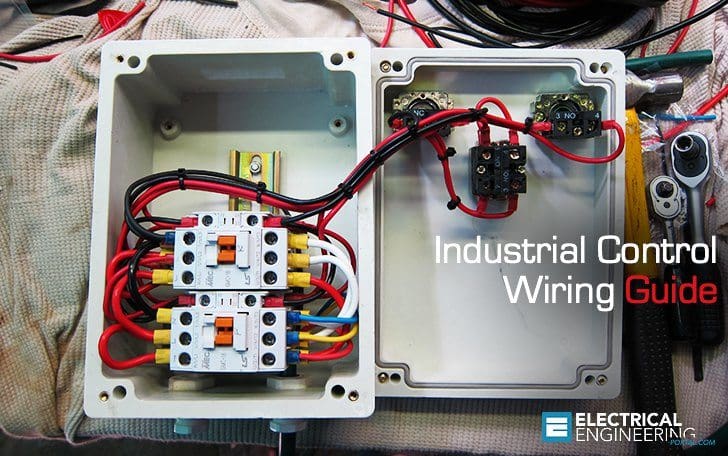
Industrial Control Wiring GuideA conductor is a material which will allow an electric current to flow easily. In the case of a wire connection, it needs to be a very good conductor. Good conductors include most metals. The most common conductor used in wire is copper, although you may come across others such as aluminium. An insulator on the other hand is a material which does not allow an electric current to flow. Rubber and most plastics are insulators.

Insulation materials

Wires and cables (conductors) are insulated and protected by a variety of materials (insulators) each one having its own particular properties. The type of material used will be determined by the designer who will take into account the environment in which a control panel or installation is expected to operate as well as the application of individual wires within the panel.


Preparing wireAs part of the insulating function, a material may have to withstand without failing:
  • Extremes of current or temperature;
  • A corrosive or similarly harsh environment;
  • Higher voltages than the rest of the circuit.
Because of these different properties and applications, it is essential that you check the wiring specification for the correct type to use.


Click here to access the full guide


Friday, February 6, 2015

What is the difference between Bonding, Grounding and Earthing?

Introduction

What is the difference between Bonding, Grounding and Earthing?
One of the most misunderstood and confused concept is difference between Bonding, Grounding and Earthing. Bonding is more clear word compare to Grounding and Earthing, but there is a micro difference between Grounding and Earhing.

Earthing and Grounding are actually different terms for expressing the same concept.
 
Ground or earth in a mains electrical wiring system is a conductor that provides a low impedance path to the earth to prevent hazardous voltages from appearing on equipment. Earthing is more commonly used in Britain, European and most of the commonwealth countries standards (IEC, IS), while Grounding is the word used in North American standards (NEC, IEEE, ANSI, UL).
The earthing connection to switchboard rear door (metal parts)

We understand that Earthing and Grounding are necessary and have an idea how to do it but we don’t have crystal clear concept for that. We need to understand that there are really two separate things we are doing for same purpose that we call Grounding or Earthing. The Earthing is to reference our electrical source to earth (usually via connection to some kind of rod driven into the earth or some other metal that has direct contact with the earth).

The grounded circuits of machines need to have an effective return path from the machines to the power source in order to function properly (Here by Neutral Circuit).
In addition, non-current-carrying metallic components in a System, such as equipment cabinets, enclosures, and structural steel, need to be electrically interconnected and earthed properly so voltage potential cannot exist between them. However, troubles can arise when terms like “bonding”, “grounding”, and “earthing” are interchanged or confused in certain situations.

The earthing connection to switchboard rear door (metal parts) In TN Type Power Distribution System, in US NEC (and possibly other) usage: Equipment is earthed to pass fault Current and to trip the protective device without electrifying the device enclosure. Neutral is the current return path for phase. These Earthing conductor and Neutral conductor are connected together and earthed at the distribution panel and also at the street, but the intent is that no current flow on earthed ground, except during momentary fault conditions.

 Here we may say that Earthing and grounding are nearly same by practice.
But In the TT Type Power Distribution System (in India) Neutral is only earthed (here it is actually called Grounding) at distribution source (at distribution transformer) and Four wires (Neutral and Three Phase) are distributed to consumer. While at consumer side all electrical equipment body are connected and earthed at consumer premises (here it is called Earthing).
Consumer has no any permission to mix Neutral with earth at his premises here earthing and grounding is the different by practice.


In both above case Earthing and Grounding are used for the same Purpose. Let’s try to understand this terminology one by one....Click here for full article