Showing posts with label electrical testing. Show all posts

Monday, June 13, 2016

13 Basic expressions often used in electrical testing

Testing of electrical installations

This is the simple list of basic terms you can often hear when testing and measurements of electrical installation (in general) is being performed. While expirienced electrical engineers will find this list short, I hope beginners will catch the essence and continue exploring this field of electrical engineering.
Feel free to suggest me an expression (along with description) you think it should be listed, it will be my pleasure to add it to the list and to move away from number 13

Ok, so here is the list:
  1. Active accessible conductive part
  2. Passive accessible conductive part
  3. Electric shock
  4. Earthing electrode
  5. Nominal voltage
  6. Fault voltage
  7. Contact voltage
  8. Limit Contact voltage
  9. Nominal load current
  10. Nominal installation current
  11. Fault current
  12. Leakage current
  13. Short-circuit current

1. Active accessible conductive part

Active accessible conductive part is the conductive part of an electrical installation or appliance such as the housing, part of a housing etc. which can be touched by a human body. Such an accessible part is free of mains voltage except under fault conditions.
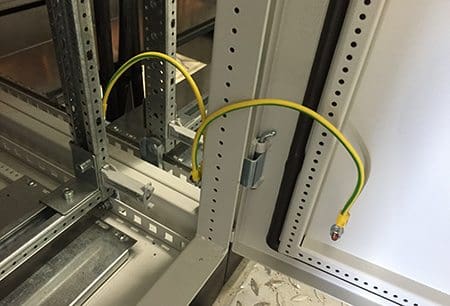
Switchboard contruction grounded
Switchboard contruction grounded (photo credit: ecsanyi)

2. Passive accessible conductive part

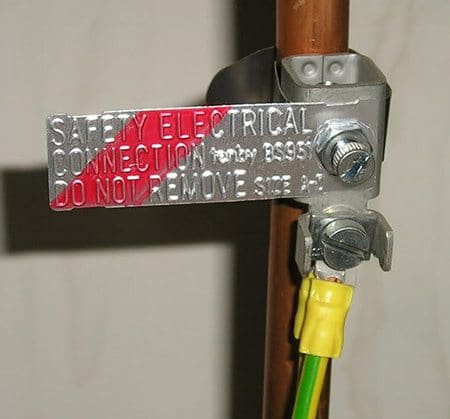
Passive accessible conductive part is an accessible conductive part, which is not a part of an electrical installation or appliance, like:
  • Heating system pipes,
  • Water pipes,
  • Metal parts of air condition system,
  • Metal parts of building framework
  • etc.

Equipotential bonding of metal pipes
Equipotential bonding of metal pipes (photo credit: diy.stackexchange.com)
Click here to access the full article

Wednesday, March 2, 2016

13 Basic expressions often used in electrical testing

Testing of electrical installations

This is the simple list of basic terms you can often hear when testing and measurements of electrical installation (in general) is being performed. While expirienced electrical engineers will find this list short, I hope beginners will catch the essence and continue exploring this field of electrical engineering.
Feel free to suggest me an expression (along with description) you think it should be listed, it will be my pleasure to add it to the list and to move away from number 13

Ok, so here is the list:
  1. Active accessible conductive part
  2. Passive accessible conductive part
  3. Electric shock
  4. Earthing electrode
  5. Nominal voltage
  6. Fault voltage
  7. Contact voltage
  8. Limit Contact voltage
  9. Nominal load current
  10. Nominal installation current
  11. Fault current
  12. Leakage current
  13. Short-circuit current

1. Active accessible conductive part

Active accessible conductive part is the conductive part of an electrical installation or appliance such as the housing, part of a housing etc. which can be touched by a human body. Such an accessible part is free of mains voltage except under fault conditions.
Switchboard contruction grounded
Switchboard contruction grounded (photo credit: ecsanyi)

2. Passive accessible conductive part

Passive accessible conductive part is an accessible conductive part, which is not a part of an electrical installation or appliance, like:
  • Heating system pipes,
  • Water pipes,
  • Metal parts of air condition system,
  • Metal parts of building framework
  • etc.
Equipotential bonding of metal pipes
Equipotential bonding of metal pipes (photo credit: diy.stackexchange.com)
Click here to access the full article

Wednesday, July 29, 2015

13 Basic expressions often used in electrical testing

Testing of electrical installations

This is the simple list of basic terms you can often hear when testing and measurements of electrical installation (in general) is being performed. While expirienced electrical engineers will find this list short, I hope beginners will catch the essence and continue exploring this field of electrical engineering.
Feel free to suggest me an expression (along with description) you think it should be listed, it will be my pleasure to add it to the list and to move away from number 13

Ok, so here is the list:
  1. Active accessible conductive part
  2. Passive accessible conductive part
  3. Electric shock
  4. Earthing electrode
  5. Nominal voltage
  6. Fault voltage
  7. Contact voltage
  8. Limit Contact voltage
  9. Nominal load current
  10. Nominal installation current
  11. Fault current
  12. Leakage current
  13. Short-circuit current

1. Active accessible conductive part

Active accessible conductive part is the conductive part of an electrical installation or appliance such as the housing, part of a housing etc. which can be touched by a human body. Such an accessible part is free of mains voltage except under fault conditions.

Switchboard contruction grounded
Switchboard contruction grounded (photo credit: ecsanyi)

2. Passive accessible conductive part

Passive accessible conductive part is an accessible conductive part, which is not a part of an electrical installation or appliance, like:
  • Heating system pipes,
  • Water pipes,
  • Metal parts of air condition system,
  • Metal parts of building framework
  • etc.

Equipotential bonding of metal pipes
Equipotential bonding of metal pipes (photo credit: diy.stackexchange.com)
Click here to access the full article

Monday, March 16, 2015

Cable Lab Speeds Product Development

When we create new cable technologies, testing has traditionally been one of the biggest bottlenecks in the development process. Even the most minor change to cable materials or structures require a battery of time-consuming tests to ensure compliance with safety standards.

Over the last year, we have eliminated that bottleneck by establishing a comprehensive test lab that allows us to perform Underwriters Laboratories (UL) and related tests in our Florham Park facility.

Certified under the UL Client test Data Program, the lab can handle all the required safety testing:

  • Mechanical testing includes tensile tests for UL 1581 and ASTM D-412, direct burial and crush tests for UL 1277, and exposed run impact tests for UL 1277.
  • Environmental testing includes air-oven aging and oil resistance tests for UL 62 and UL 1581 compliance.
  • Low temperature testing equipment consists of cold impact and cold bend tests required by UL 1581, UL 1277 and UL 444.
  •  Electrical testing includes insulation resistance tests for UL 83 and UL 1581 as well as DC resistance bridge testing for UL 1581 and UL 1277. 
  • Flame testing chambers allow testing for UL 1581, ULVW-1 and UL Horizontal Flame standards.


More Thank UL Testing

Our testing lab goes well beyond the tests needed to satisfy UL requirements. We routinely perform additional testing to support Lapp's proprietary quality and electrical safety standards, some of which address gaps in industry standards. This extra testing requires equipment that is non-standard in cable labs in North America.

Among the unique test cells we operate is large continuous flex machine developed by the Lapp Group in Germany. Measuring 10 meters long, it tests the durability of cable within an energy chain under different duty cycles and bend radii.

Another test machine not normally seen in North American cable development labs is a video microscope that allows us to take precise measurements of the thickness, diameter and concentricity of a cable wires, insulation and jacketing. This dimensional data is used on a daily basis to validate to consistency of our manufacturing processes.

Finally, even some of our "standard" equipment is more advanced than usual. To take two examples, our low temperature impact and crush test cells feature a level of automation that sets them apart from the manual machines normally used for these tests.

Our North American testing lab, which has been operating for over a year, required a major investment. But the lab is already paying dividends for our customers. By bringing the testing in house, jest steps away from our manufacturing lines.


Click here to learn more about our testing capabilities.